Showing posts with label Review. Show all posts

Sunday, February 19, 2023

How to Win Friends and Influence People

 Author: Dale Carnegie

Originally published: October 1936


Self note

Practical – Every day

  1. Become genuinely interested in other people
  2. Smile
  3. Remember people names - made them feel important
  4. Give honest and sincere appreciation
  5. Be a good listener, encourage others to talk about themselves
  6. Make the other people feel important, do it sincerely. ‘Every man I meet is my superior in some way. In that, I learn of him.’

Negotiation

  1. Begin in friendly way, avoid argument. Don't condemn, criticize, complain
  2. Talk in terms of the other person's interests  stop talking about what you want, but try to see other people's viewpoint, how can I make this person want to do it?
  3. Get the other person saying ‘yes, yes’ immediately
  4. Let the other person do a great deal of the talking
  5. Let the other person feel that the idea is his or hers
  6. When you are wrong, admit it quickly and emphatically. Say respect to other people's opinion, never say you are wrong, Be sympathetic with the other person’s ideas and desires
  7. Appeal to the nobler motives, dramatise your ideas, throw down a challenge

Leadership

  1. Begin with praise and honest appreciation
  2. Call attention to people’s mistakes indirectly
  3. Talk about your own mistakes before criticising the other person
  4. Ask questions instead of giving direct orders
  5. Let the other person save face
  6. Praise the slightest improvement and praise every improvement. Be ‘hearty in your approbation and lavish in your praise.’
  7. Give the other person a fine reputation to live up to.
  8. Use encouragement. Make the fault seem easy to correct.
  9. Make the other person happy about doing the thing you suggest.

From Book

Part 1. Fundamental techniques in handling people

1. Don't condemn, criticize, complain
2. Give honest and sincere appreciation
3. Arouse in other people an eager want (stop talking about what you want, but try to see other people's viewpoint, how can I make this person want to do it?)


Part 2. Six ways to make people like you

1. Become genuinely interested in other people
2. Smile
3. Remember people names - made them feel important
4. Be a good listener, encourage others to talk about themselves
5. Talk in terms of the other person's interests
6. Make the other people feel important, do it sincerely

Part 3. How to win people to your way of thinking

1. Avoid arguments
2. Say respect to other people's opinion, never say you are wrong
3. When you are wrong, admit it quickly and emphatically
4. Begin in a friendly way
5. Get the other person saying ‘yes, yes’ immediately
6. Let the other person do a great deal of the talking
7. Let the other person feel that the idea is his or hers
8. Try honestly to see things from the other person’s point of view
9. Be sympathetic with the other person’s ideas and desires
10. Appeal to the nobler motives
11. Dramatise your ideas
12. Throw down a challenge

Part 4. BE A LEADER

1. Begin with praise and honest appreciation
2. Call attention to people’s mistakes indirectly
3. Talk about your own mistakes before criticising the other person
4. Ask questions instead of giving direct orders
5. Let the other person save face
6. Praise the slightest improvement and praise every improvement. Be ‘hearty in your approbation and lavish in your praise.’
7. Give the other person a fine reputation to live up to.
8. Use encouragement. Make the fault seem easy to correct.
9. Make the other person happy about doing the thing you suggest.

Deep Work

 Author: Cal Newport

Originally published: January 5, 2016

Introduction

  • Deep Work: Professional activities performed in a state of distraction-free concentration that push your cognitive capabilities to their limit. These efforts create new value, improve your skill, and are hard to replicate.
  • Shallow Work: Noncognitively demanding, logistical-style tasks, often performed while distracted. These efforts tend to not create much new value in the world and are easy to replicate.
  • More time spent in shallow work will permanently reduce our capacity to perform deep work.
  • The Deep Work Hypothesis: The ability to perform deep work is becoming increasingly rare at exactly the same time it is becoming increasingly valuable in our economy. As a consequence, the few who cultivate this skill, and then make it the core of their working life, will thrive.
  • A deep life is a good life

PART 1 - THE IDEA

1. Deep Work is Valuable

  • As intelligent machines improve, and the gap between machine and human abilities shrinks, employers are becoming increasingly likely to hire “new machines” instead of “new people.”
  • Valuable:
    • The High-Skilled Workers - good at working with intelligent machines
    • The Superstars - now marketplace become accessible from all over the world. People will choose the best
    • The Owners - capital + labor = return. Labor become more elite, so capital has more impact
  • Two Core Abilities for Thriving in the New Economy - both requires deep works
    • The ability to quickly master hard things.
    • The ability to produce at an elite level, in terms of both quality and speed.
  • Deliberate Practice
    • Your attention is focused tightly on a specific skill you’re trying to improve or an idea you’re trying to master
    • You receive feedback so you can correct your approach to keep your attention exactly where it’s most productive.
  • Why it’s important to focus intensely on the task at hand while avoiding distraction is because this is the only way to isolate the relevant neural circuit enough to trigger useful myelination. By contrast, if you’re trying to learn a complex new skill in a state of low concentration (perhaps you also have your Facebook feed open), you’re firing too many circuits simultaneously and haphazardly to isolate the group of neurons you actually want to strengthen.
  • High-Quality Work Produced = (Time Spent) x (Intensity of Focus). 

2. Deep Work is Rare

  • The Principle of Least Resistance: In a business setting, without clear feedback on the impact of various behaviors to the bottom line, we will tend toward behaviors that are easiest in the moment.
  • Why culture of connectivity persist:
    • In the environment where we can get answer or specific piece of information quickly, life become easier -  no need advance planning, organizing, preparing
    • Easier to spend time in our inbox than planning the day with advanced task management
    • Instead of trying to manage their time and obligations themselves, they let the impending meeting each week force them to take some action on a given project and more generally provide
    • The Principle of Least Resistance, protected from scrutiny by the metric black hole, supports work cultures that save us from the short-term discomfort of concentration and planning, at the expense of long-term satisfaction and the production of real value.
  • Busyness as Proxy for Productivity: In the absence of clear indicators of what it means to be productive and valuable in their jobs, many knowledge workers turn back toward an industrial indicator of productivity: doing lots of stuff in a visible manner.

3. Deep Work is Meaningful

  • On our worst days, it can seem that all knowledge work boils down to the same exhausting roil of e-mails and PowerPoint, with only the charts used in the slides differentiating one career from another.
  • These elderly subjects were not happier because their life circumstances were better than those of the young subjects; they were instead happier because they had rewired their brains to ignore the negative and savor the positive.
  • In work (and especially knowledge work), to increase the time you spend in a state of depth is to leverage the complex machinery of the human brain in a way that for several different neurological reasons maximizes the meaning and satisfaction you’ll associate with your working life.
  • “The best moments usually occur when a person’s body or mind is stretched to its limits in a voluntary effort to accomplish something difficult and worthwhile.”
  • Ironically, jobs are actually easier to enjoy than free time, because like flow activities they have built-in goals, feedback rules, and challenges, all of which encourage one to become involved in one’s work, to concentrate and lose oneself in it. Free time, on the other hand, is unstructured, and requires much greater effort to be shaped into something that can be enjoyed.
  • Whether you’re a writer, marketer, consultant, or lawyer: Your work is craft, and if you hone your ability and apply it with respect and care, then like the skilled wheelwright you can generate meaning in the daily efforts of your professional life. You don’t need a rarified job; you need instead a rarified approach to your work.

PART 2 - THE RULES

1. Work Deeply

  • The key to developing a deep work habit is to move beyond good intentions and add routines and rituals to your working life designed to minimize the amount of your limited willpower necessary to transition into and maintain a state of unbroken concentration.
  • Any time he could find some free time, he would switch into a deep work mode. This habit also requires a sense of confidence in your abilities— a conviction that what you’re doing is important and will succeed.
  • “[ Great creative minds] think like artists but work like accountants.”
  • Discipline #1: Focus on the Wildly Important:  
    • “The more you try to do, the less you actually accomplish.” 
    • “If you want to win the war for attention, don’t try to say ‘no’ to the trivial distractions you find on the information smorgasbord; try to say ‘yes’ to the subject that arouses a terrifying longing, and let the terrifying longing crowd out everything else.”
  • Discipline #2: Act on the Lead Measures
    • Lag measures describe the thing you’re ultimately trying to improve.
    • Lead measures, on the other hand, “measure the new behaviors that will drive success on the lag measures.”  Lead measures turn your attention to improving the behaviors you directly control in the near future that will then have a positive impact on your long-term goals.
  • Discipline #3: Keep a Compelling Scoreboard
  • Discipline #4: Create a Cadence of Accountability - weekly review
  • At the end of the workday, shut down your consideration of work issues until the next morning— no after-dinner e-mail check, no mental replays of conversations, and no scheming about how you’ll handle an upcoming challenge; shut down work thinking completely.

2. Embrace Boredom

  • Much in the same way that athletes must take care of their bodies outside of their training sessions, you’ll struggle to achieve the deepest levels of concentration if you spend the rest of your time fleeing the slightest hint of boredom.
  • People who multitask all the time can’t filter out irrelevancy. They can’t manage a working memory. They’re chronically distracted. They initiate much larger parts of their brain that are irrelevant to the task at hand… they’re pretty much mental wrecks.
  • Improving your ability to concentrate intensely and overcoming your desire for distraction.
    • Instead of scheduling the occasional break from distraction so you can focus, you should instead schedule the occasional break from focus to give in to distraction. The key here isn’t to avoid or even to reduce the total amount of time you spend engaging in distracting behavior, but is instead to give yourself plenty of opportunities throughout your evening to resist switching to these distractions at the slightest hint of boredom.
    • Identify a deep task (that is, something that requires deep work to complete) that’s high on your priority list. Estimate how long you’d normally put aside for an obligation of this type, then give yourself a hard deadline that drastically reduces this time. If possible, commit publicly to the deadline— for example, by telling the person expecting the finished project when they should expect it. If this isn’t possible (or if it puts your job in jeopardy), then motivate yourself by setting a countdown timer on your phone and propping it up where you can’t avoid seeing it as you work. At this point, there should be only one possible way to get the deep task done in time: working with great intensity— no e-mail breaks, no daydreaming, no Facebook browsing, no repeated trips to the coffee machine. Like Roosevelt at Harvard, attack the task with every free neuron until it gives way under your unwavering barrage of concentration.
    • The goal of productive meditation is to take a period in which you’re occupied physically but not mentally— walking, jogging, driving, showering— and focus your attention on a single well-defined professional problem.
      • Suggestion #1: Be Wary of Distractions and Looping
      • Suggestion #2: Structure Your Deep Thinking - This cycle of reviewing and storing variables, identifying and tackling the next-step question, then consolidating your gains is like an intense workout routine for your concentration ability.

3. Quit Social Media

  • The Any-Benefit Approach to Network Tool Selection: You’re justified in using a network tool if you can identify any possible benefit to its use, or anything. If you don’t attempt to weigh pros against cons, but instead use any glimpse of some potential benefit as justification for unrestrained use of a tool, then you’re unwittingly crippling your ability to succeed in the world of knowledge work.
  • The Craftsman Approach to Tool Selection: Identify the core factors that determine success and happiness in your professional and personal life. Adopt a tool only if its positive impacts on these factors substantially outweigh its negative impacts.
  • The Law of the Vital Few*: In many settings, 80 percent of a given effect is due to just 20 percent of the possible causes.
  • If you want to eliminate the addictive pull of entertainment sites on your time and attention, give your brain a quality alternative. 

4. Drain the Shallows

  • Decide in advance what you’re going to do with every minute of your workday.
  • How to measure depth of certain task: How long would it take (in months) to train a smart recent college graduate with no specialized training in my field to complete this task? - then focus on the most deep task
  • Fixed schedule productivity: Finish your work by 17:30. A commitment to fixed-schedule productivity, shifts you into a scarcity mind-set. The limits to our time necessitate more careful thinking about our organizational habits, also leading to more value produced as compared to longer but less organized schedules.


Wednesday, November 23, 2022

Don't Waste Your Life

 Author: John Piper (2007)


"God created us to live with a single passion to joyfully display his supreme excellence in all the spheres of life.

The wasted life is the life without this passion.

God calls us to pray and think and dream and plan and work not to be made much of, but to make much of him in every part of our lives."

How to apply this passion in secular works?
  1. We can make much of God in our secular job through the fellowship that we enjoy with him throughout the day in all our work. We work with God, by breathing continual thanks to Him and taking God's promises to work.
  2. We make much of Christ in our secular work by the joyful, trusting, God-exalting design of our creativity and industry. God created us for work so that by consciously relying on His power and consciously shaping the world after His excellence, we might be satisfied in Him, and He might be glorified in us. 
  3. We make much of Christ in our secular work when it confirms and enhances the portrait of Christ’s glory that people hear in the spoken gospel. By having such high standards of excellence and such integrity and such manifest goodwill that we put no obstacles in the way of the gospel but rather call attention to the all-satisfying beauty of Christ.
  4. We make much of Christ in our secular work by earning enough money to keep us from depending on others, while focusing on the helpfulness of our work rather than financial rewards. “Do not work for the food that perishes, but for the food that endures to eternal life, which the Son of Man will give to you” (John 6: 27).
  5. We make much of Christ in our secular work by earning money with the desire to use our money to make others glad in God. Work to have to give.
  6. We make much of Christ in our secular work by treating the web of relationships it creates as a gift of God to be loved by sharing the gospel and by practical deeds of help. “Faith comes from hearing, and hearing through the word of Christ” (Rom. 10: 17).

Thursday, March 26, 2020

First Impression: Xenoblade Chronicles 2

I am currently playing Xenoblade Chronicles 2 (XC2), and I am falling in love with this game


Pro:

  1. The where to go system is really nice, telling you the direction and distance from you to the target. I really hate lost while trying to clear a quest, so this feature is huge for me
  2. The story and character are interesting. I usually skip all the story, but the XC2 cutscenes are quite good, like watching anime. The characters are adorable. Homura, Nia, Hana, and Hikari are all top tier girls
  3. The combat system is somehow not boring. It's a mix between auto attack and manual, getting the excellent result are satisfying
Con:
  1. Overly complex tutorial. Instead of showing you one by one, this game throw everything at you without giving you the chance to try it. On other aspects, this game decide to tell you nothing about it. Only after 15 hours of game play I managed to do a blade combo (after watching YT of course)
  2. Some quest doesn't have a clear direction. As stated above, I really hate getting lost. Some quest just tell you to search [object] without any further explanation. I don't know if that [object] is a monster, flower, wood, gear, or what, and where to find them. I need to Google for that, and I always think you must be able to clear a game without any outside resource.
The con seems longer than the pro, but actually it's just my complaint because I need to depends on YT or Google to advance in a game. The actual gameplay and story is engaging, so I will keep playing this for now and enjoying every second of it.

Tuesday, February 25, 2020

Review Nintendo Switch Game: The Legend of Zelda: Breath of the Wild


Yes. I am reviewing the game that already out for almost three years. This is my personal review for a game that universally agreed as the best Nintendo Switch game ever.

And I have a different opinion about it.


0 - 60 Hours

The first 60 hours of playing Zelda was amazing. I couldn't play it without spoke to myself that this is the best game ever. It gave me the same feeling when I first played Portal game, in sense of how the game stands above other game decisively. 

The first thing that left me in awe was how big the game is. It felt really really big, like I can run, climb, fly, and warp without limit. I felt free. I can go anywhere while sensing a progression. The story is wrapped so nice so I didn't even realize that you can do the divine beast in any particular order. I always thought that story is linear. 

Playing the game felt so rewarding. Exploring the new places will unlock the shrine or tower that I can warp to anytime, so any journey is not fruitless. Once I found the shrine I don't ever need to do my long journey ever again. If I came to the place with no shrine, at least it almost always have korok seeds, a little compensation that still made me happy. 

The orb system is amazing. I always wanted to do one more shrine before I stop playing, because the orbs reward can be used to increase my stamina or health, which will make me able to go to the places which I cannot reach before.


60 - 70 hours

Past the 60 hours mark, I started realizing that I don't have to kill all enemies that I met. It will be faster if I ran past them. The red moon will bring them back anyway. I only did the bokoblin camp that have chest reward, only to find the disappointing item inside.

Zelda do not have level system, so my stats will not grow. The only real permanent upgrade is a gear set. No matter how powerful a sword or a shield is, it will break anyway. Arrow is fun and it seems like I got a lot of it, but one big fight can cost me around 50 arrows, so I never feel safe with the amount of arrows that I have. My stamina wheel was maxed out long ago, the the heart doesn't matter after a certain point. Fights in Zelda is never about the battle of stamina. It either I kill the enemies without taking damage (unless a small amount of damage when I messed up, which a certain amount of health really helps) or the enemies killed me no matter how much health I have. I never have a situation when I trade hits with enemies and won because I have a lot of health. So in this point, almost all rewards are disappointing.

I then try to complete 100% of the shrines per area. I had to sit in front of my computer, having the maps open while playing the game. Often times even that doesn't help. I need to watch YouTube to find the exact location. I lost countless time at this point. I climbed the highest mountain for minutes only to find that my sight was blocked by another mountain in far away. The sheikah sensor is useless. It just keep beeping randomly, and one I found the exact location of the shrine (with YouTube help, of course), it was nowhere near the loudest beeping location shown by the sensor. Some of the side quest is nonsense. The quest does not have the "in game pattern" so sometimes the answer is just random. I like the clever one like the secret club in Gerudo Town, it has a clear clue and a clear logic, but the one like "find this person" just went without any hint. It was impossible for me to clear without having to Goggle it. It is not playing the game then, it's just cheating and not satisfying.


70 - 90 hours

I lost countless times, hard to find shrine or do quest without have to Google it, I have a really good sets of gear so there are no rewards that interest me anymore, I was 70+ hours into the game. I felt burnout. I am tired. I just want to finish it.

So I went to Hyrule castle to fight Ganon. I was really craving a sense of progression. I was thinking that maybe I will feel better after defeating Ganon, then I can complete the shrines and quest in peace.

Oh God.

It just end after Ganon was defeated. My disappointment is immeasurable and my day is ruined. I always thought that you can continue playing after that. It just doesn't make sense for me, after a lot of grinding the story just end right there. And I got a little star on my save file. I want to enjoy the result of my hardwork. I want to explore Hyrule in peace. I want to see the joy of the people which I just saved. I want to have a long deep talk with Zelda. I don't care how that will fit in the story, but just make it work somehow.


90+ hours

I was at 90+ hours of gameplay and I just didn't want to play the game anymore. What is the point. I cannot go crazy in fight because the source is limited. I didn't want anymore grind. And I was sad. Really sad.


My suggestions for the game

Below are the things that I want to be implemented in Zelda. It is not possible in BOTW, but I hope somehow BOTW 2 will have something like these *finger crossed*.

  1. Make the freaking sheikah sensor better!. I think it is best to have it as a reward for defeating Ganon. A real sensor with some obvious arrow or some shit. I will certainly find 100% of the shrines or korok seed or the side quest if I have that. I beat the game, right? I just do not want to lost anymore, I want a clear direction.
  2. Make the resources infinite! Again, I think it also best to be a reward for defeting Ganon. My idea is you have an area full of enemies (just say they are the leftover of Ganon power or something like that) and in that area, your swords and shield does not break, and your arrow stocks does not deplete. I want to go all out, releasing the steam by overkilling those poor enemies. I want to swing my thunder sword infinitely. I want to bombard them with my meteor rod. I want to see the enemies stuck when I keep them frozen with my ice arrow. Doesn't it sound like a lot of fun? 
With those feature, I am sure I will enjoy Zelda BOTW a lot more. Despite all of that, I still rate Zelda BOTW 8.5/10. It is a really good game. I just want it a little bit different and it will be 10/10. I definitely will play BOTW 2 once it come out, and I wish it will erase my frustration.

Sunday, November 3, 2019

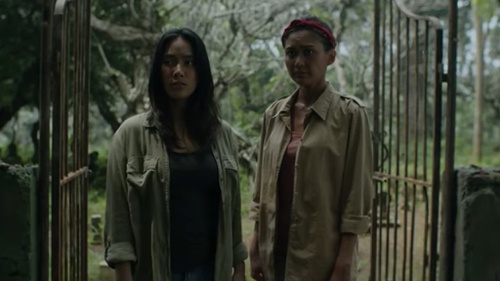
Review Perempuan Tanah Jahanam

Perempuan Tanah Jahanam is so close to become a masterpiece.


Perempuan Tanah Jahanam atau PTJ adalah film "horror" pertama saya setelah puasa selama beberapa tahun.

Sebenarnya PTJ mungkin lebih cocok disebut film thriller mistis dibandingkan horror murni. Fokus utama dalam film ini bukan kepada makhluk gaib, melainkan kepada kepercayaan masyarakat dan bagaimana pengaruhnya kepada para tokoh cerita.

Dari mulai film sampai pertengahan cerita, saya menganggap film ini jenius. Film ini tidak mengandalkan jump scare untuk mebuat penonton takut, melainkan mengandalkan horror psikologis. Banyak adegan yang sebenarnya biasa sehari-hari, namun dibuat menjadi seram. Bahkan tidak banyak sosok setan atau makhluk lainnya yang ditampilkan, membuat film ini sangat berbeda dari film horror kebanyakan. Suspense yang konstan sepanjang film, cinematography yang apik, serta akting yang mumpuni dari para pemerannya membuat film ini sangat mudah untuk dinikmati. Unik dan epic, kombinasi yang membuat film ini luar biasa.

Sayangnya, film ini tidak lepas dari beberapa kekurangan yang menurut saya fatal. Pertama, adegan monolog dan trance dari Rahayu merupakan sebuah lazy writing. Penonton diceritakan semua informasi-informasi yang diperlukan untuk membuat adegan-adegan sebelumnya masuk akal. Show, not tell. Prinsip ini yang masih tidak dilakukan oleh PTJ. Alih-alih membuka informasi kepada penonton tahap demi tahap melalui adegan, semuanya dijelalkan sekaligus melalui flashback yang usang. Ibarat kata, sebagian besar adegan film dieksekusi dengan telaten dan penuh usaha, namun sebagjan lainnya di lakukan dengan floppy dan rush. Hasilnya, adegan tersebut kurang bisa menyerap dan mengaduk-aduk emosi penonton, agak menyia-nyiakan potensial yang dipunya.

Kekurangan kedua, banyak adegan yang terasa mengganjal dan tidak masuk akal. Adegan Ki Sapta bunuh diri, disusul oleh ibunya yang bunuh diri, Rahayu yang melarikan diri, warga yang mematung kemudian tertawa bahagia mengelilingi bayi ketika ada dua mayat orang yang selama ini mereka hormati dan ikuti ajarannya menumpuk di pinggir. Adegan bunuh diri itu sungguh mengganggu kebahagian dan kelegaan yang seharusnya dialami warga setelah terlepas dari kutukan selama 20 tahun. Sungguh sebuah scene yang mengecewakan untuk sebuah klimaks. Lalu, bukankah Ki Sapta adalah orang baik yang menuntut balas atas dikorbankannya tiga anak kecil kampungnya? Mengapa dia justru membantai orang-orang sebelum membunuh sang dalang asli?

Ya, PTJ memang hampir luar biasa. Namun, perbedaan antara "luar biasa" dan "hampir luar biasa" sayangnya sangat jauh. Andai saja kekurangan-kekurangan tersebut di atas tidak ada, film ini hampir pasti menjadi salah satu film horror terbaik Indonesia. 

Dream Diary 2025

Date: 20250103 Note: Lagi sakit kepala, minum obat terus tidur dari jam 21:00 sampai 05:40 Dream: Mimpi pertama Aku lagi nonton tv, lalu no...